
Running a Sex Offender Check in Newton County
The Arkansas Sex Offender Registry is the main public search. It is managed through the Arkansas Crime Information Center within the Arkansas Department of Public Safety. Search by Newton County or a more focused location, then open a publishable profile for details.
The local layer is the Newton County Sheriff. The sheriff registers people living in unincorporated Newton County, answers registration questions, and gives neighborhood notice for certain levels. The Newton County Sheriff AR app also advertises a Sex Offenders feature. Use the state registry for the official public profile and the sheriff for local questions or information about possible noncompliance.
Why Some Newton County Registrants Are Not Online
A missing result does not prove that no registration duty exists. Arkansas public display depends on risk level and statutory rules. Level 1 registrants are not broadly shown. Some Level 2 registrants also remain off the public site unless the public-display condition applies.
The sheriff FAQ identifies another delay: a recently convicted person may not appear until the state assessment assigns a level. The office says that assessment after conviction usually takes about six months. Search again later or call the sheriff if a specific safety concern rests on current, credible information.
Searching the Arkansas Sex Offender Registry
The portal supports both person and place searches. Begin with the least ambiguous facts available and use the map to understand location, not to infer conduct beyond the published record.
- Open the Arkansas public registry and review its conditions and public-safety purpose.
- Choose name, address, city, county, ZIP code, or place as the search route.
- Set Newton County or the relevant local location and inspect the map or list results.
- Open the matching public profile and verify identifiers, risk level, offense facts, and registration status.
| Field Label | Type | Required | Newton County Use |
|---|---|---|---|
| Address | Text and map | No | Displays publishable profiles around an entered address |
| City | Text or selection | No | Focuses on Jasper, Western Grove, or another named place |
| County | Selection or text | No | Select Newton County for countywide results |
| ZIP code | Text | No | Narrows a location search |
| Place | Text | No | Searches a named place |
| Name | Text | No | Checks a known name against public profiles |
| Map view | Display | Not applicable | Shows publishable profiles in the selected view |
| Updates | Alert feature | No | The sheriff says users may register for updates online |
Newton County Sheriff Registration Questions
People living in unincorporated Newton County register through the Sheriff’s Office. The sheriff FAQ directs questions to Investigator Kevin Thomas at 870-446-5124 during 8:00 a.m. to 4:00 p.m., Monday through Wednesday. That channel can explain local registration or notification procedure without exposing information the public registry withholds.
Arkansas law requires a person moving to or returning to the state to register with the local law-enforcement agency that has jurisdiction within three business days of establishing residency. Failure to register, report an address change, or comply with assessment is a Class C felony. Report a concern to law enforcement rather than trying to investigate a person directly.
Jurisdiction matters in rural Newton County. The sheriff's published instruction expressly covers unincorporated areas. A Jasper or Western Grove mailing address should not be used to guess which agency has registration authority. The registry's city, county, ZIP, and map fields are search tools; the responsible law-enforcement agency decides the local registration route.
Neighborhood notice is also narrower than a countywide list. The sheriff says residents near certain registrants receive notification. That local action works beside the public portal, where Level 3 and Level 4 profiles are disclosed and only qualifying Level 2 profiles appear. It does not make Level 1 information broadly public. If a notice seems inconsistent with the map, check the risk-level rule and assessment timing before drawing a conclusion.
When calling, distinguish a request for public information from a report of noncompliance. For a portal question, give the search location and explain what did not appear. For a factual concern, provide the observed address, date, and conduct without confronting anyone. The sheriff can compare those facts with registration data that the public cannot see.
What a Registry Profile Shows
Public profiles present the identifiers and case information Arkansas law authorizes for the person's level. Fields can vary, and the presence or absence of one field should not be treated as proof beyond the profile.
| Name and Aliases | Published identity names used to distinguish the listed person |
|---|---|
| Photo and Description | Available image and physical identifiers for matching |
| Registered Location | Publishable address or map information allowed by statute |
| Offense Information | Published offense and conviction or adjudication facts |
| Risk Level | Arkansas assessment level from Low Risk through Sexually Violent Predator |
| Registration Status | Available status or compliance information shown by the portal |
| Other Identifiers | Vehicles, scars, marks, or tattoos may appear when present and public |
A profile is a registry disclosure, not an arrest-history report. It should not be expanded with rumor, social media, or unofficial people-search data.
The Newton County Assessment Delay
Arkansas uses the Sex Offender Screening and Risk Assessment Program coordinated by the Arkansas Department of Correction. The assessment sets the risk level that drives public notification. A person who fails to submit to assessment receives a default Level 3 assignment.
This process creates a time gap between conviction or arrival and final public display. The sheriff's approximate six-month explanation is a local planning cue, not a guaranteed deadline for every case. Call the registration office when the timing itself matters.
Registration Requirements and Levels in Arkansas
Arkansas uses four risk levels. The research did not confirm a single duration or verification schedule for every person, so those duties must be checked against the person's governing law and sheriff instructions rather than invented as fixed terms.
| Risk Level | Meaning | Public Web Status | Duration and Verification |
|---|---|---|---|
| Level 1 | Low Risk | Not broadly published on the public site | Confirm individual duty with the registering agency |
| Level 2 | Moderate Risk | Certain profiles public when the offender was 18 or older and the victim was 14 or younger at offense time | Confirm individual duty with the registering agency |
| Level 3 | High Risk | Public web disclosure required | Confirm individual duty with the registering agency |
| Level 4 | Sexually Violent Predator | Public web disclosure required | Confirm individual duty with the registering agency |
Ark. Code § 12-12-913 controls public disclosure. Risk level describes assessed notification risk, not a new conviction or a prediction that harm will occur.
Newton County Sex Offender App Access
The Newton County Sheriff AR app lists Sex Offenders among its public-safety features, along with tips, staff information, and news. It is a mobile access layer, not a replacement for the official Arkansas registry or emergency service.
Use the app to reach sheriff information and the registry feature, then verify profile facts in the state portal. The app listing warns that it is not for emergencies. Call emergency services for an immediate threat and use the sheriff's normal number for non-emergency registry questions.
Newton County Checks Across State Lines
The National Sex Offender Public Website provides a federal search layer across participating jurisdictions. It is useful when a person has moved or when the relevant address is outside Arkansas.
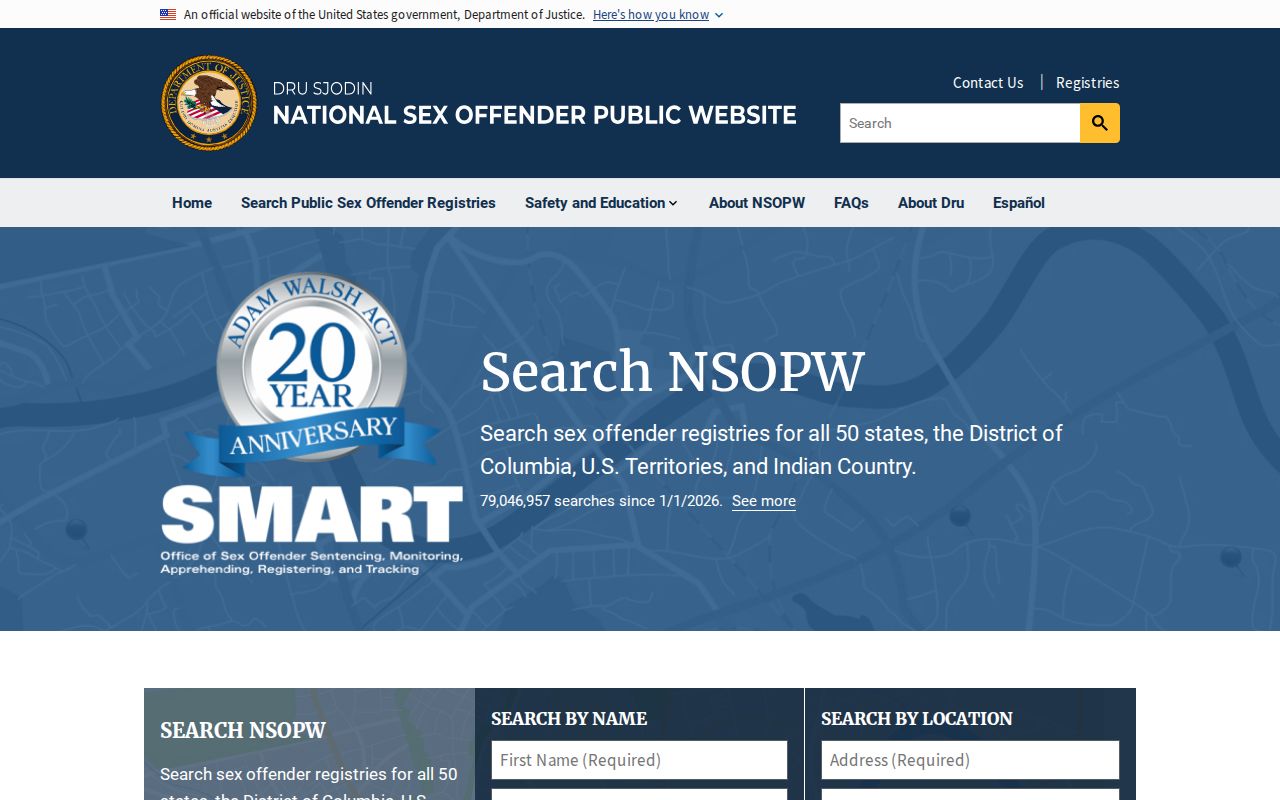
NSOPW aggregates public jurisdictional registry data, so follow a result back to the responsible state, territory, tribal, or local registry for current details. A national no-result has the same basic limit: only information authorized for public display can appear.
Reporting Newton County Noncompliance Safely
If credible information suggests an unreported move, wrong registered address, or other failure, call the Newton County Sheriff at 870-446-5124. The sheriff FAQ invites the public to share information the office should know about a registrant. ACIC can also be reached at 322 South Main Street, Suite 615, Little Rock, AR 72201, or 501-682-2222.
Give facts such as the location, time, and conduct observed. Do not confront, follow, photograph, threaten, or publish accusations about the person. Law enforcement and ACIC can compare the report with protected registration data and decide whether an investigation is warranted.
Arkansas Disclosure Rules for Newton County
The statutory source below explains why Newton County public results are level-based and why the registry is a notification tool rather than a complete list of all people with registration duties.
The Arkansas sex offender disclosure statute sets the public-information framework.
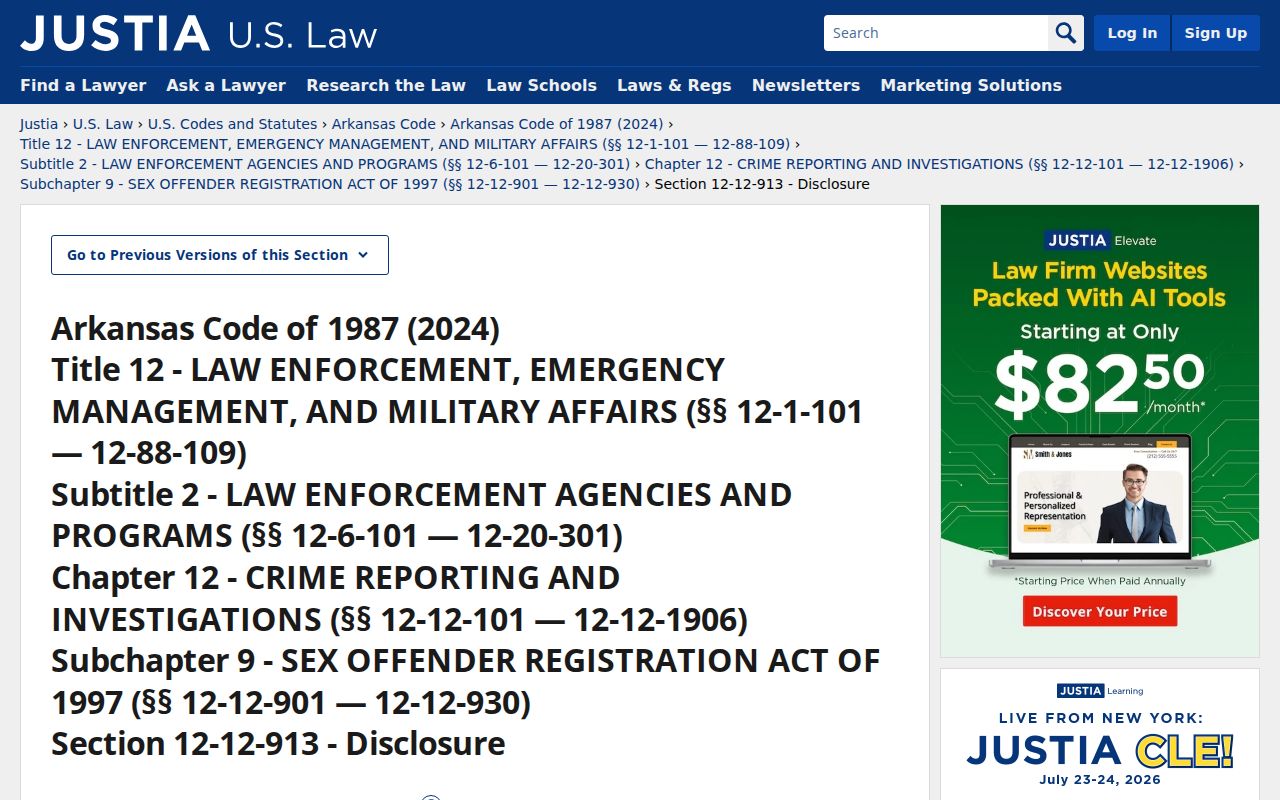
Read the statute together with ACIC instructions and local sheriff guidance because assessment level, age and victim conditions, and registration status affect what becomes public.
Lawful Use and Community Notification
The registry exists for safety planning and lawful community awareness. Newton County notification may include residents near certain registrants, while online updates let users monitor public information without direct contact. Treat every profile as a limited official disclosure and verify current concerns with the sheriff.
Use Registry Information Lawfully: Misusing registry information to harass, threaten, intimidate, or target a registrant or household is a crime under Arkansas law. Ark. Code § 12-12-913 provides disclosure for public protection, not vigilantism.
Community awareness is most useful when it leads to calm safety steps, accurate reporting, and respect for the bounds of the published record. If a profile appears wrong, send the concern to the sheriff or ACIC instead of editing or redistributing it.